Mónica Puig: the human that brought magic and gold to Puerto Rico


By Carlos Calo / Monday, December 9, 2024
When you mention Puerto Rico in sports, people will think of baseball and boxing, sometimes even basketball, if you ask someone young. Those are the sports that are played the most on the island. But those sports did not give the island an Olympic Gold Medal: it was tennis. Mónica Puig, a 22-year-old Puerto Rican athlete, conquered Rio de Janeiro against all odds and made it a reality for Puerto Ricans to listen to their national anthem, “La Borinqueña,” for the first time in the Olympic Games.
Between Puerto Rican pride and controversy
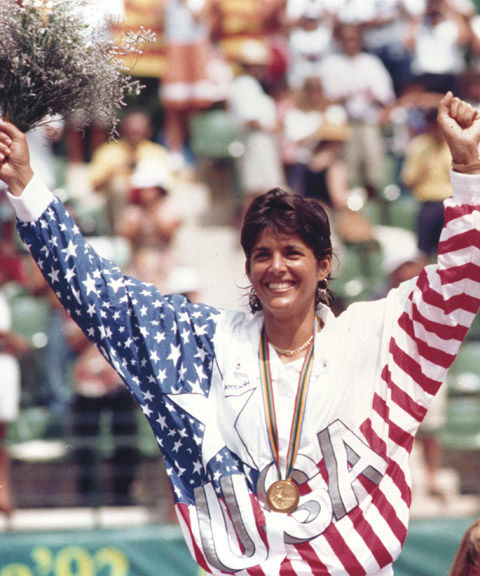
Puig wasn’t the first Puerto Rican to win a gold medal in the Olympic games. Beatriz “Gigi” Fernández won two gold medals for the United States. After winning several medals for Puerto Rico in Pan-American and Central American games, Fernández decided to compete in doubles for the North Americans.
“I wanted to win gold. I was coming off winning four Grand Slams in doubles, and I was at the peak of my career, I didn’t have someone in Puerto Rico to play at that level with me and win,” said Fernández in an interview with Héctor Deplaymaker. He then asked her about traveling in time and choosing between competing alongside Mónica Puig for Puerto Rico or Mary Joe Fernández (the player with who Beatriz won two Olympic gold medals for the USA) representing the United States, “easy decision, without a doubt, Mónica. And we could have won a medal.”
After Fernández decided that she wanted to represent the US in doubles tennis, winning two gold medals in Barcelona in 1992 and Atlanta in 1996, a gap was created between her and the Puerto Rican people because she chose to represent and win with another country. “That I’m a traitor is one of the nicest things that they say to me, and that still makes me sad, but I know that there are Puerto Ricans that understand why I did it, I just wanted to win,” added Gigi Fernández. At the 2016 games in Rio, the Puerto Rico Olympic Committee named Jaime Espinal (Puerto Rican silver medalist in wrestling, London 2012) the flag bearer for Puerto Rico.
After this decision, Fernández reacted on Twitter, now X. This triggered a series of events in which Fernández and Espinal exchanged tweets regarding the topic:

“Is he Dominican or from @PuertoRicoPUR? Double standard,” wrote @gigifernandez at the moment of the Parade of Nations in Rio 2016.
“Oh my God. What a mess!!! Facts: Pan Am '79 bronze, '83-2 silver -Central Am '82 gold - 2 silver-1. Flag bearer '83. All for @PuertoRicoPUR,” wrote @gigifernandez past noon.
“Doubles player without a player from Puerto Rico to play with. No choice. Gold ’92 and ’96 for the US, but with my heart always with @PuertoRicoPUR,” added @gigifernandez.
Minutes later, Jamie Espinal responded directly to her tweets.
“With respect, I’m Dominican @gigifernandez, no one answered your question, I represent Puerto Rico with my life for more than a thousand reasons.”
Immediately, she replied to his tweet in a comment.
“@jaimeespinalpr, I support you. It is a blessing to carry the Puerto Rican flag. Let’s give credit where credit is due. That’s all.”
Finally, the wrestler replied, grateful.
“@gigifernandez Thank you, my respect always champion.”
Fernández has been part of some similar moments like this against athletes from the island. Most recently, at the 2021 games in Tokyo, Jasmine Camacho Quinn won the second gold medal for Puerto Rico in the Olympics on the 100 meters with hurdles.

“Is she Puerto Rican? Does she speak Spanish? Was she raised in Puerto Rico? Hhmmm. How curious.”
“I just want her to win so I can listen to “La Borinqueña” and sing it, but she is not Puerto Rican at all. I can bet she doesn’t even know the anthem. Same as Monica, who didn't know the anthem.
For this reason, some people from Puerto Rico don’t support her. What history won’t change is the fact that she was born on the island, and she won several medals representing Puerto Rico.
“To question if Jasmine is Puerto Rican is ignorance. She’s representing the Island with honor and pride. Instead of breaking down our athletes, let’s help build them up. This Rican blood runs deep, and a hater could never stop greatness,” Ramon Clemente (National Team basketball player) posted on X.
Puerto Rico in the Olympic Games
Borinquen (the name that the Indigenous people gave the island) has been participating in the Olympic games since 1948 when the International Olympic Committee recognized the Puerto Rico Olympic Committee. Since then, Puerto Rico hasn't missed an Olympic cycle, winning medals in nine of the 20 games.
Why is Puerto Rico not the USA in the Olympics? That’s a question that a lot of people have. The answer is that Puerto Rico is a U.S. territory, not a state. Within that distinction, Puerto Rico is its own country and competes internationally. There are eight dependent territories with recognized National Olympic Committees, meaning they can compete in the Olympics as their own country. Four are from the United States: Puerto Rico, Guam, American Samoa, and the U.S. Virgin Islands. Three British territories: the British Virgin Islands, Cayman Islands, and Bermuda. Additionally, Hong Kong has its delegation. Each of these territories competes under their flag, showing their unique identity at the Olympic games.
Between the London 1948 and Beijing 2008 games, Puerto Rico had only won six medals in those 60 years. Since then, Puerto Rico has won an additional six medals between the London 2012 and Paris 2024 games. In Rio 2016, Mónica Puig made history by being the first Puerto Rican athlete to win gold at the Olympics representing the island. In Tokyo 2020, Jasmine Camacho Quinn broke the Olympic record in 100m hurdles with a time of 12.26 seconds in the semi-finals. Then, in the final, she won the gold medal, being the second Puerto Rican athlete to win a gold medal in the Olympics. In Paris 2024, she won the bronze medal, making history and becoming the only Puerto Rican athlete to have won two Olympic medals.
The moment of truth
Puig gave herself the nickname “Pica Power” after working with her coach, Alain de Vos, from Belgium. He told her that in practice, you always need to break rocks, work hard, and give all you have to be able to win difficult matches. London 2012 was the first Olympics since Los Angeles 1984 that Puerto Rico won two medals. The pressure for Rio 2016 was different, “Mónica was a total surprise,” expressed Zacha Acosta, press representative for the Puerto Rico Olympic Committee in Rio. “No one had her as a possible candidate for a medal; the real candidates were Jeyvier Cintrón in boxing and Franklin Gómez in wrestling,” she added.
Cintrón finished fifth place in London, while Gómez was eliminated in the first round against Besik Kudukhov from Russia, who won the silver medal. Javier Culson was also a candidate for a medal after winning bronze in London and grabbing the silver in the Pan American games in Toronto. At the time Puig classified to the Olympic games, she was No.34 in the world and was unseeded in the Olympics.
“Being unseeded or seeded at a tournament is obviously important because if you are seeded, you won’t face another seeded player in the draw,” expressed Mónica Puig. “But if you are the underdog, you have no pressure, and no one is expecting you to get far in the tournament, and you can become the dark horse of the tournament,” she added.
2016 was a great year for Mónica. She placed second in her first tournament of the year, a WTA tournament in Sydney, Australia. At the Australian Open, she lost in the third round against the fourth seed of the tournament, Agnieszka Radwanska. At the French Open, she also reached the third round. In the Eastbourne International, she made it all the way to the semifinals after beating nine-time Grand Slam winner Kristina Mladenovic. Then, it was time for her Rio 2016 journey.
“The question surrounding the Puerto Rico Olympic Committee was simple: are we going to win medals? We already won two in London, we need to do better,” commented Zacha Acosta.
On the other side of the conversation is Mónica, saying, “I just feel grateful to be in the Olympic games.”
“In the media in Puerto Rico, Mónica wasn’t among the favorites to win a medal,” said Zacha.
“The beautiful thing about sports is that it’s not over until the last at-bat, the last pitch, the last kick, the last throw, nothing is written in stone, and Mónica is proof of that. She made them believe,” added Acosta.
Unexpected strong winds and heavy rain in Rio caused interruptions to the Olympic calendar. Tennis, rowing, kayaking, and beach volleyball were all affected by it.
“Rain, game suspended, next day, rain, game suspended, but when she could play, she kept winning. And remember that the Williams sisters were there, the Italians and the Germans, too. And people started to ask, who is this girl? What is Puerto Rico?” commented Zacha.
“And then you see all these professional players that you only see on the TV, and you feel like you are in Disney. And then Mónica in the middle of all those giants. At that time, Mónica started to carry the pressure and responsibility that she could be the one bringing the medal to Puerto Rico,” added Acosta.
“I don’t think it was until the third round when I really started to explore the possibility that I had a chance to win a medal. After that match, I realized I was playing well enough to give myself the opportunity to see how far I could go,” expressed Mónica Puig.
That third-round match was against the No.3 seeded player, Garbiñe Muguruza from Spain. Puig won in straight sets (6-1,6-1). In the quarterfinals, Mónica also won in straight sets (6-1,6-1) against the German Laura Siegemund, who was also an unseeded player. The semifinals were the biggest game of that year so far; she went against the No. 11-seeded player in the tournament, the Czech player Petra Kvitova. Kvitova had eliminated Ukrainian Elina Svitolina, who eliminated Serena Williams in the third round. Puig won the semifinal in three sets (6-4, 1-6,6-3), ensuring the possibility of winning medals against all odds.
“I was so nervous that day, it hit me because I'm a woman, and Monica just secured a medal in the Olympics, the first woman ever securing an Olympic medal while representing Puerto Rico,” said Zacha Acosta.
“I called my friend Ineabella Diaz, who was the only woman Puerto Rican athlete with an Olympic recognition after finishing fifth place in Barcelona 1992 and Athens 2004. I remember she was in Puerto Rico, and I asked her, how do you feel that Mónica just broke your record?” commented Zacha.
Diaz replied, “That’s great, it was time that someone broke that record, I don’t want it. She already did it better.”
“After the semifinal, we were talking to the press for an hour. Mónica was so calm with the press. She said this is going to be my only declaration because I have to rest. “I have a lot of respect for Gigi Fernández, and I understand that she wanted to represent the U.S. to be able to win a gold medal,” explained Acosta.
“The day of the gold medal match was like any other day, that was one of the days that I wasn’t nervous at all, maybe because I already knew I had secured a medal,” said Mónica Puig.
“Rio was one of those tournaments where I was able to somehow shut my brain off of work when I was in a non-work environment. That was very unique about the experience; I was able to disconnect, which helped me a lot in the final,” added Puig.
“I remember that moment; I was in the top floor seats of the stadium. And you see the Germans on one side and then a lot of people cheering for Mónica because she was the underdog,” said Zacha.
During and after the Gold
In the gold medal match, Puerto Rico was frozen. Everyone was watching that game.
“I found myself with my family in Luquillo watching the games. I witnessed Mónica Puig earn Puerto Rico our first Olympic Gold medal from my family’s condo there. My love of sport and the way Puerto Ricans embodied it only grew from there,” expressed Ayden Owens-Delerme, Olympian decathlete for Puerto Rico, in his book Race of My Own.
“I was celebrating my birthday in Jobos, Isabela. Everyone was just paralyzed watching the game. When everyone saw the last ball was outside of the line, we started crying and yelling, everyone hugging even though we didn’t know each other,” expressed Coralys Molina.
“During the ceremony, everyone was singing the anthem with our hands on the chest,” added Molina.
“I was in the living room with my family, we could just hear the screams of our neighbors, everyone celebrating the gold medal,” said Ana Sánchez.
“I was at the mall, they had TVs on the hallways, and everyone was watching, when Mónica won, everyone started celebrating; even some employees from the stores were outside in the hallway celebrating with the people,” expressed Carlos Gómez.
“Those couple of seconds when I realized that final play the ball went out, it was like seeing it in slow motion, it was epic,” expressed Edwin Colón.

“When I heard the national anthem of Puerto Rico, I felt an immense amount of joy and pride. I was still a little stunned, to be honest, because never in my wildest dreams did I imagined to win something like an Olympic Gold medal, and here I was at the top of the podium, listening to “La Borinqueña” for the first time in Olympic History, and that was just insane,” expressed Puig.
“The moment when Mónica wins is a moment when you understand that you don’t have to be a state of the United States for our flag to be up there. Mónica was the perfect character to say that the colors of the Puerto Rican flag are more valuable than anything,” expressed Zacha Acosta between tears.
“I’m like a little girl at Christmas, all my wishes become true. Thanks to Mónica, we now have a better Puerto Rico, even if it’s only for a few days, everyone is happy, and everyone feels able to conquer the world, that’s the magical thing about the sport,” expressed Sara Rosario, president of the Puerto Rico Olympic Committee, in her blog.
“Mónica broke two things that are in our society as a country, being a woman in sports and our identity as a country,” added Zacha.

“I remember that she was in a doping test, and I wanted a picture with her. Because it’s not the same when you are working with the athletes, but at that moment, we were all celebrating. And Mónica said to me, grab the medal, and that picture is engraved in my life,” said Acosta.
“The welcome when I landed in Puerto Rico was… I honestly don’t know if I knew what to expect, but it definitely exceeded all my expectations. There was so much joy, so much positivity. I was able to celebrate with my family and friends and all the people. I don’t have the words to describe how beautiful that moment was,” expressed Mónica.

After being an Olympic Gold medalist
“Winning the medal impacted my life on a couple of levels…on the professional side, it put a target on my back. Players wanted to beat me; once you win something that big, it is kind of a thing that “we need to see what she is doing and put a stop to it,” commented Monica.
“On a personal level, the Olympics is such a big thing that I became more known, maybe fame increased a little, and sometimes it was tough to manage because when you have a lot of eyeballs on you, you try to develop this character of perfection and that doesn’t exist. But it was a lot of learning,” added Puig.
Mónica Puig retired on June 13, 2022. She explained that the reason was because of the injuries during the last three years of playing, having had surgery. Now, she is a triathlete, a former tennis player, a daughter, a sister, a wife, and, as she describes herself, “a person just like anybody with a lot of scary goals.”
She also said:
“Never limit yourself to being one thing in life. You can be so many different things in this lifetime, and you need to have the courage to fail a couple of times until you get it right and find in your life what brings you the most joy and gratification. Because in life, if you limit yourself to one thing, you may be closing the door on many different opportunities… life has many open doors if you are willing to look for them.”


Comments